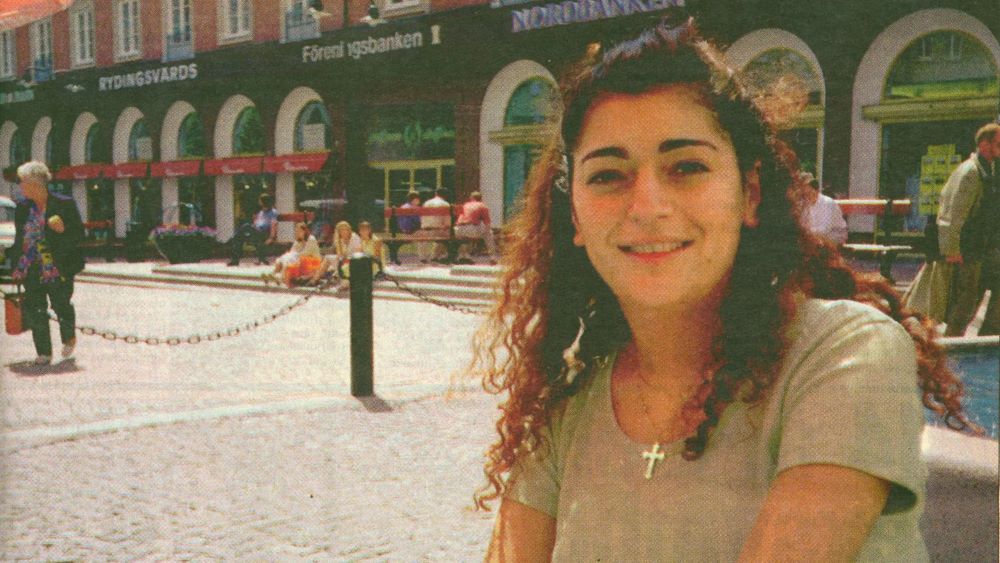
Linköping 1995: The Cold Case That Burned for Decades
The year 1995 cast a long, cold shadow over the quiet Swedish city of Linköping. A 21-year-old woman, Sargonia Dankha, vanished without a trace, leaving behind a family tormented by uncertainty and a community grappling with an unsolved mystery. What followed was a 28-year wait for answers, a grueling period of anguish that finally culminated in an extraordinary tale of justice delivered across international borders. The Linköping 1995 murder case, once a symbol of an enduring enigma, now stands as a testament to perseverance, international cooperation, and the unwavering pursuit of truth.
The Unsolved Mystery of Linköping 1995
In the spring of 1995, Sargonia Dankha, a young woman in her early twenties, disappeared from Linköping. Her sudden absence immediately raised alarm bells, and local authorities launched an investigation. Suspicion quickly fell upon a man in his 40s who had reportedly been in a relationship with Sargonia. Investigators uncovered disturbing evidence: blood and hair strands belonging to Sargonia were found both in his home and in his car. Furthermore, it emerged that the man had reportedly threatened Sargonia after she had ended their relationship for another man, suggesting a clear motive rooted in jealousy and possessiveness.
Despite the compelling circumstantial evidence and a clear suspect, the case hit a formidable roadblock: Sargonia Dankha’s body was never found. In Sweden, as in many legal systems, the absence of a body significantly complicates a murder prosecution. Without definitive proof of death, and especially without a body to corroborate the manner of death, prosecutors faced an insurmountable challenge. Consequently, the suspect was released from custody, and despite the lingering suspicion, the investigation in Sweden eventually went cold. The man, seemingly free from legal repercussions, eventually left Sweden and relocated to Italy, leaving Sargonia's family in Linköping without closure and the community haunted by the specter of an unpunished crime.
For nearly three decades, the Sargonia Dankha case remained a painful open wound, a constant reminder of the justice denied in the Linköping 1995 disappearance.
A Persistent Pursuit: The Family's Unwavering Fight for Justice
While the official investigation in Sweden stalled, Sargonia Dankha’s family refused to let her memory fade or her case be forgotten. For 28 long years, they carried the torch of hope, their grief compounded by the agony of not knowing what truly happened to their beloved daughter and sister. Their unwavering determination became the driving force behind an incredible breakthrough.
Faced with the inaction in Sweden, Sargonia's family, driven by an unyielding desire for justice, took an extraordinary step. They turned their appeal towards Italy, where the primary suspect had made his new home. Through persistent efforts, they managed to engage the attention of an Italian prosecutor. This proved to be a pivotal moment. Approximately a year prior to the man's eventual arrest, the Italian prosecutor made the courageous decision to reopen the case, recognizing the profound injustice that had lingered for nearly three decades. This highlights the critical role that victims' families can play in keeping cold cases alive and pushing for international legal intervention when domestic avenues are exhausted.
Their resolve demonstrates that even when official channels seem closed, the power of a family's love and their relentless pursuit of truth can pierce through decades of silence and spark new life into seemingly dead-end investigations.
International Collaboration: Cracking the Case Across Borders
The decision by the Italian prosecutor to revive the Linköping 1995 investigation marked the beginning of an intricate period of international collaboration. While the Swedish police, specifically the department for serious crimes in Linköping, had no direct insight into the Italian investigation, they provided crucial support. As Magnus Roodla, head of Linköping police's serious crimes division, stated, "We have only assisted with knowledge and material." This seamless cooperation between Swedish and Italian authorities, albeit in a supportive capacity from the Swedish side, was fundamental to advancing the case.
In a dramatic development, early one Saturday morning, 28 years after Sargonia's disappearance, the man, now in his 70s, was arrested in the picturesque Italian town of Sanremo. This arrest was the culmination of meticulous work by Italian law enforcement, building upon the original Swedish evidence and likely new inquiries. The judicial process in Italy moved forward, leading to a trial that addressed the evidence accumulated over decades. Ultimately, an Italian court delivered a verdict that reverberated across continents: the 74-year-old man was convicted of Sargonia Dankha's murder and sentenced to life imprisonment. This landmark conviction, for a crime committed in Sweden, in an Italian court, underscores the growing significance of international judicial cooperation in an increasingly interconnected world.
The cold case solved in Linköping demonstrates how cross-border collaboration can overcome jurisdictional hurdles, ensuring that perpetrators cannot simply escape justice by relocating to another country.
Lessons Learned: The Enduring Hope for Cold Cases
The resolution of the Linköping 1995 murder case offers several invaluable insights for law enforcement, victims' families, and communities grappling with unsolved crimes:
- The Power of Perseverance: This case is a profound example that justice, though delayed, is not necessarily denied. The unwavering commitment of Sargonia's family, coupled with the diligence of Italian authorities, proved that even after decades, cold cases can be solved.
- Evolving Forensic Capabilities: While the initial evidence was crucial, modern forensic techniques or a fresh review of old material can often yield new insights. Though not explicitly detailed in this case's resolution, the ability to re-examine existing evidence with new technology often plays a significant role in cold case breakthroughs.
- The Importance of International Judicial Cooperation: In an increasingly globalized world, criminals may cross borders. This case highlights the critical need for robust international agreements and collaborative frameworks between law enforcement agencies and judicial systems to ensure that justice is served regardless of geographic boundaries.
- "No Body" Doesn't Mean "No Justice": The conviction without Sargonia Dankha's body is a powerful reminder that while challenging, it is possible to secure a murder conviction based on strong circumstantial and forensic evidence. This offers hope for other families facing similar circumstances.
Practical Advice for Families of Cold Case Victims:
- Maintain Communication: Regularly engage with law enforcement, even if there seems to be no new information. Keep the case active in their minds.
- Document Everything: Keep meticulous records of all interactions, evidence, and any information related to the case.
- Explore All Avenues: As Sargonia's family did, consider legal or investigative avenues in other jurisdictions if the circumstances warrant it.
- Advocacy and Awareness: Keep the victim's story alive in the public consciousness, responsibly and respectfully. This can sometimes lead to new leads or public support.
- Seek Support: Connect with other families of cold case victims for mutual support and shared strategies.
The Linköping 1995 murder case stands as a powerful testament to the belief that the pursuit of justice has no expiration date. It is a story of profound human resilience, international collaboration, and the ultimate triumph of truth over decades of uncertainty. For Sargonia Dankha's family, the conviction of her murderer offers a semblance of peace, a long-awaited closure to a chapter of immense suffering. For the rest of the world, it serves as an inspiring reminder that unwavering determination can indeed ensure that justice is delivered, even 28 years later.